Posts

Speaking better English - Anecdotes
Image
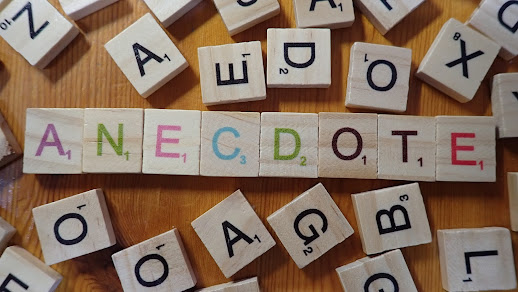
An anecdote is a very short story about some real person or a real event that happened to the speaker. The idea of this story to make the listener compare a current event of happening with an older story. For instance: Two parents are discussing whether or not to get a dog for the family. The father says: When I was a kid, my dog was my best friend. My childhood was better because of him. The mother can then compare this story with the current state of affairs then might use the anecdote as persuasion that they should get a dog. There are basically five types of anecdote Humorous – stories that can add a bit of humour to the topic being discussed. People were arguing about their pets which was the best for young children. The parents were saying that this one or that one was best. I interjected,   “We had a rabbit once. It was delicious.” Everyone laughed and stopped arguing.   Reminiscent             I remember ...
Speaking better English - Adage

Image
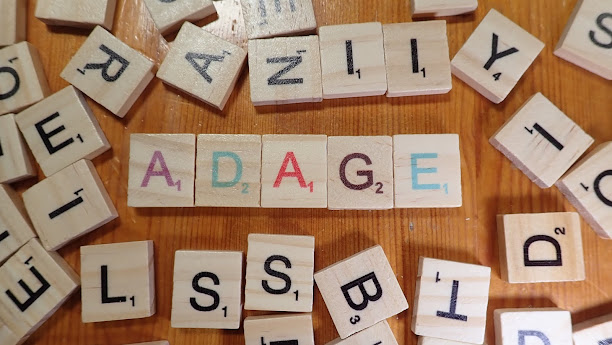
An Adage is  a proverb or short statement expressing a general truth. Adages provide us with simple guidelines with which to live. In literature, adages are often used as sign of wisdom and of a work’s universal appeal and truth. The early bird catches the worm. If you do something early or before other people, you will be successful. An adage has been passed down over time and because of this it serves as a well of knowledge of collected and accepted wisdoms. Here are a few well known ones. Some are very old – Eat drink and be merry – is probably in the region of 3000 to 4000 years old. Others are from more recent history "A penny saved is a penny earned." "An ounce of prevention is worth a pound of cure." "Eat to live, and not live to eat." "Early to bed and early to rise, makes a man healthy, wealthy, and wise."

Speaking better English - Merisms

Image
Dictionaries define a merism as a reference to something by its polar extremes, as in "we searched high and low" For example  I searched high and low for the key.  A  Merism  is a figure of speech by which something is referred to by a phrase that described the whole something by counting all its parts. Here are just a few Merisms He fell for the plot hook, line and sinker. This is from fishing. All the parts of a fishing setup. He sold the business lock, stock and barrel. This merism comes from the anatomy of a gun, the lock the bit that did the firing, the stock the part held, and the barrel. So, the phrase is about the whole being the sum of its parts. Other phrases include: nook and cranny day and night male and female better or for worse richer for poorer ladies and gentlemen young and old flesh and bone sun sea and sand life and soul Two items are often compared to represent the whole The last will and testament - 2 documents in two different courts that applie...

Speaking better English - Cliches

Image
A  Cliché is what you write or say when you can't think of a new way to express an old idea. A  Cliché is a tired phrase or an old way of saying something. A Cliché is used in spoken English much more than in written English. Many people consider a Cliché used in a book to be dull and unimaginative.      There are hundreds if not thousands of Clichés in Modern English, so many are used in the written word; it is just that people don't realise that fact. Let us have a look at some commonly used Clichés. Most of these Clichés are used by my Mother when she talks to me. These Clichés are in use in everyday spoken English. ·          a chip off the old block ·          a far cry ·          a foregone conclusion ·          a lick and a promise ·        ...

Speaking better English - how to cope with words you haven't met before

Image
How to cope with words you haven't met before is a big problem in English because the ways that words are spoken do not always reflect how they are written. I suppose these words are divided into two categories, those words you can look up in a dictionary and there it will tell you how to pronounce them - the Articulate app will tell you how to say many words. Just add the word you wish to learn to the app in the List of My Words part and the app will teach you to say these words, clearly , easily and precisely. This is true when we meet a few names. A couple of examples are the girls names Hermione and Siobhan and the boys name Sean. If you have never met the names before then you may have no idea how to say them. Reading the names can cause confusion of how to pronounce them. The name Hermione was used in JK Rowling's novels about Harry Potter. Many people from around the world read and enjoyed the books but only when they watched the film did they learn how to say the name c...

Speaking Better English - Paying Attention to the Stressed Sounds

Image
When you listen to people speaking English , you start to notice that they stress certain sounds in words. Sometimes in different sentences or in different contexts the same word is stressed differently. The English language uses  stress  in words and in sentences. What this means is that when you speak English you will also need to stress, or emphasize, certain words and syllables (sounds) to give words and sentences different meanings. Sometimes, placing the stress on the wrong syllable completely changes the word and perhaps its meaning. Written to spoken English AL-ways has this problem. In many cases the stress is achieved by changing the pitch of a word. Here are some examples Let us look at the word - record  - changing from a noun to a verb As you can see in the short video you can stress any sound in a sentence. Stressed words are used in the spoken language and are not see very often in the written word. When I read a book to my students each time I read a passa...

Speaking better English - Synecdoches

Image
What is a synecdoche? It is a figure of speech in which, most often, a part of something is used to refer to its whole. Let's have a look at some of these "The captain commands one hundred sails" Obviously the Captain doesn't actually command one hundred sails, but the sails are part of a ship, so it is a way of saying that the captain commands one hundred ships, the  ships being the thing of which a sail is a part of. Using synecdoche's is a way of making what you are saying more interesting. If you said "check out my new wheels," "wheels" is another example of synecdoche, used here to refer to a "car." A part of a car, in this example, represents the whole of the car. So we are saying check out my new car. Synecdoche's are often  used in speech my people to draw attention to an object. Mostly people use a synecdoche  to spice up everyday language. We can use this example of a car perhaps in a different way As we saw, "wheel...